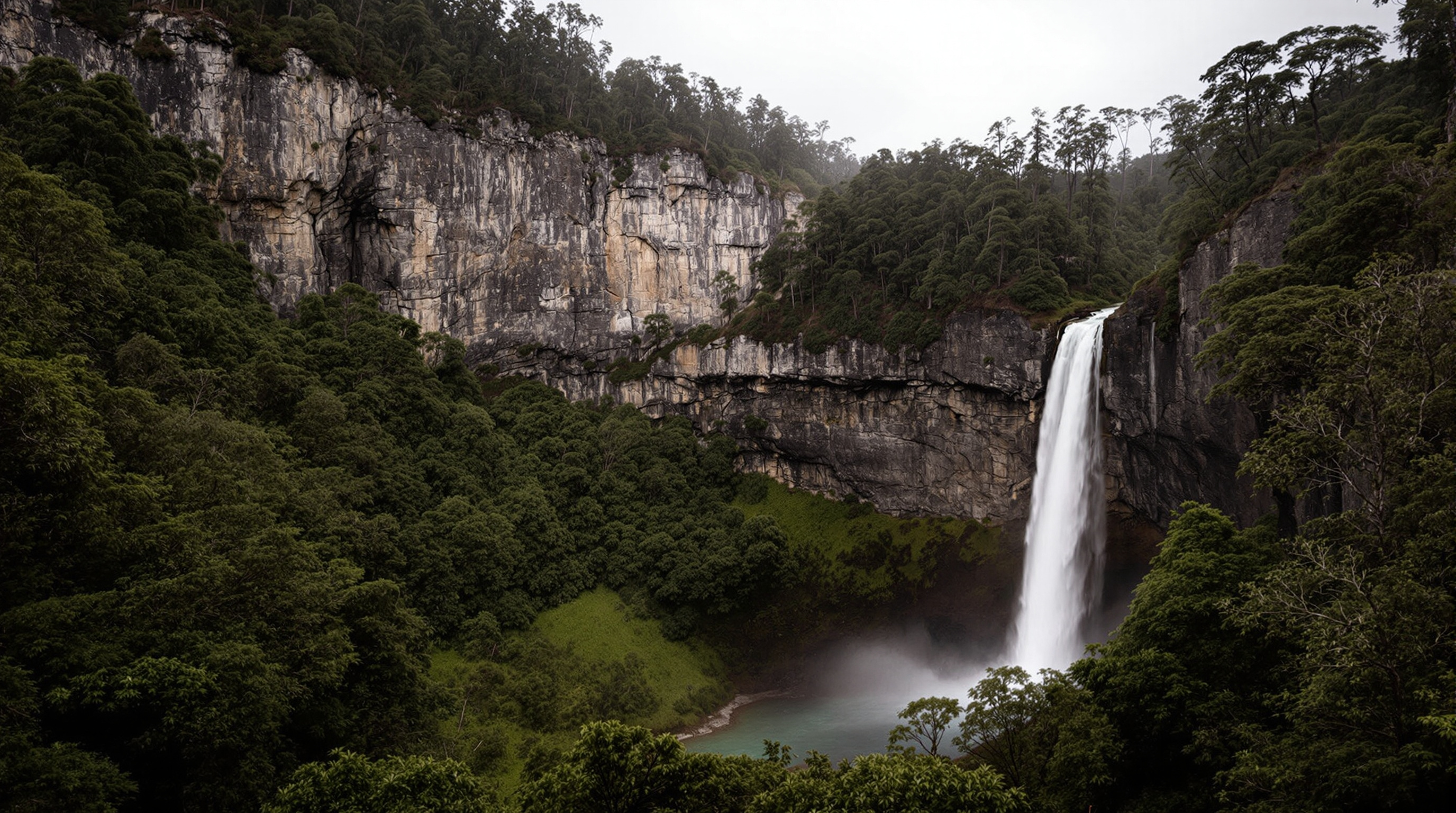
A high granite plateau, deep gorges falling to the east, some of the tallest waterfalls in the state, and a cold clear light unlike anywhere on the coast — the New England Tablelands are a landscape that teaches a photographer patience.
Inland and elevated, the plateau has its own weather and its own light. Understanding both is the whole of landscape photography here; the locations reveal themselves only to a photographer who knows when to stand in front of them.
The gorge country and Waterfall Way
East of the plateau the tableland breaks into the dramatic gorges of Oxley Wild Rivers National Park, where rivers drop off the escarpment in waterfalls that rank among the highest in New South Wales. The touring route known as Waterfall Way links a string of these lookouts and cascades. For photography, the gorges demand two things: an understanding of when the sun reaches into (or leaves) a deep valley, and the patience to work with running water. A tripod and a slow shutter turn a waterfall into silk; a faster shutter keeps its texture and force. Neither is more correct — they are two honest descriptions of the same place.
Highland light through the day
Altitude and clear air make the plateau's light directional and precise. The middle of a clear day is harsh and best avoided for grand scenics; the reward hours are the edges:
- First light — valley fog, low sun, and a brief softness over frosted pasture.
- The golden hour before sunset — long shadows that reveal the shape of the land.
- The blue hour after sunset — cool, even light ideal for water and for town scenes.
Overcast days, often dismissed, are perfect for the intimate landscape: the detail of granite and lichen, the forest interior, a single tree. Soft light is a gift for anything that is about texture rather than grandeur.
The seasons of the plateau
The New England towns are famous for a strong European autumn, rare for inland Australia, and for genuine winter frost. Autumn offers colour along the streets and in the parks; winter offers frost, mist and a low sculpting sun; the green months after rain transform the pasture and fill the falls. A landscape photographer who returns to the same locations across a full year will build a far richer body of work than one who chases novelty. This seasonal discipline underlies much of the Australian landscape work held by the National Gallery of Australia.
Working responsibly in the landscape
The gorges are steep, remote and changeable; cold nights and slippery lookouts are real hazards, and phone coverage is patchy. Responsible landscape practice means checking conditions with NSW National Parks, staying behind barriers at lookouts, telling someone your plan, and treating the country and its wildlife with care. The best landscape photographers are also its quietest custodians.
Depth without clutter
Wide country tempts a lens towards the horizon, but depth begins close to the feet. Choose one foreground element — granite, grass, a pool or fence line — and decide whether it leads the eye or merely fills space. Lowering the camera gives it weight; raising the camera can separate overlapping ridges and reveal a river. Focus for the whole arrangement rather than choosing infinity, and inspect the corners for grasses moved by wind during an exposure. If the foreground is not helping, remove it by stepping forward. A simpler view can carry distance through layers of tone.
Bringing it together
The principles that make these landscapes work — light, timing and composition — are the same ones behind good portraiture and event work. For the underlying craft, see the field guide to light and composition.